A cracked display can hold up an entire repair queue, but ordering the wrong iPhone screen replacement kit creates a bigger problem than the original damage. For repair shops, refurbishers and confident DIY buyers, the real challenge is not finding a screen – it is finding the correct kit for the exact model, with the right specification, and without wasting time on returns or rework.
That matters more with iPhone repairs than many buyers expect. Apple device generations often look similar across sizes and series, yet connector layouts, screen technologies and supporting components can differ enough to make a near match completely unusable. If you are buying for trade volume or even for a single repair, accuracy comes first.
What an iPhone screen replacement kit should include
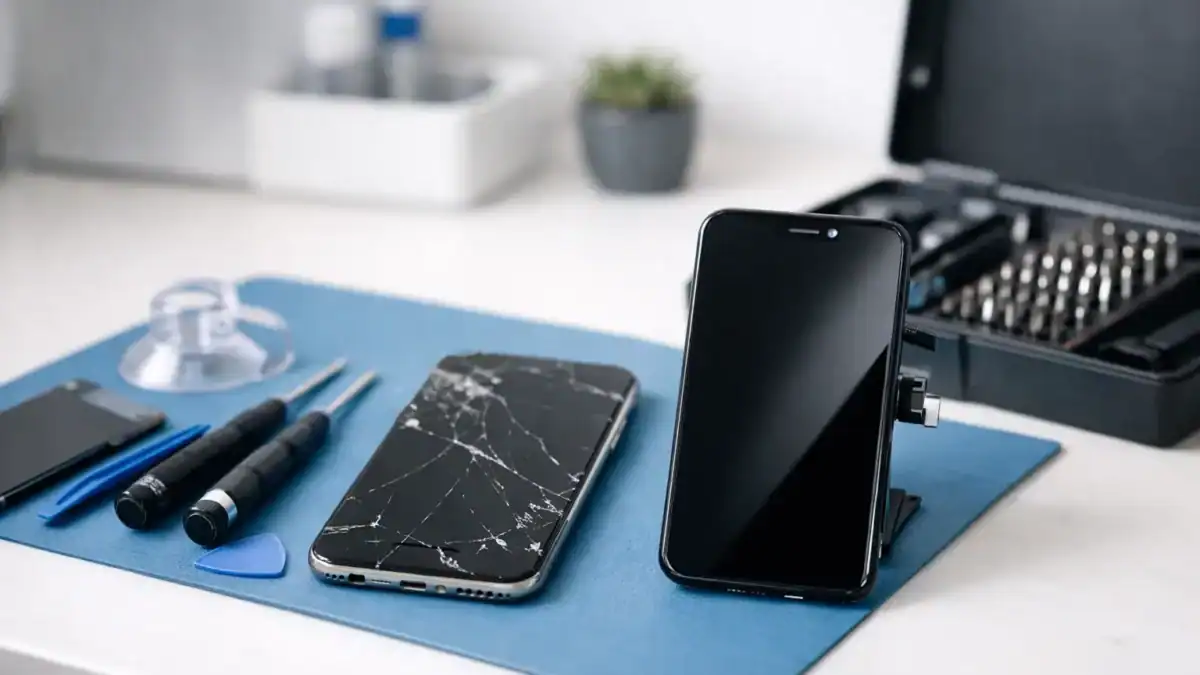
At a basic level, an iPhone screen replacement kit usually combines the replacement display assembly with the tools needed to remove the damaged screen and fit the new one. Depending on the product type, that may include precision screwdrivers, opening tools, suction tools, adhesive strips and occasionally supporting items such as a spudger or tweezers.
The key point is that not every kit is built for the same buyer. Some are designed around convenience for one-off repairs, where a technically confident customer wants the screen and the common tools in one order. Others are more useful for trade accounts that already have bench tools and only need the correct display assembly. In those cases, the term kit can refer to a bundled screen-and-tools option rather than a universal standard.
For a professional environment, the value of a kit is less about having every possible tool and more about reducing friction in ordering. If a technician can source the correct screen with the accessory items needed for that specific job, the repair moves faster and stock control stays cleaner.
Why compatibility matters more than price
When buyers search for an iPhone screen replacement kit, price is often the first filter. That is understandable, especially for high-volume repair work or lower-margin handsets. But screen compatibility is the point where cost savings can quickly disappear.
A mismatch can happen in several ways. The most obvious is choosing the wrong model entirely, such as confusing an iPhone 11 screen with an iPhone XR, or mixing up Pro and non-Pro variants in later generations. The less obvious issue is ordering a part that fits physically but does not match the expected quality level, brightness, touch response or installation requirements for the repair standard you need to meet.
Trade buyers usually think in terms of callbacks, fitting time and customer expectations rather than headline product price. A cheaper assembly that introduces display issues or touch inconsistency is rarely the cheaper option once labour is counted. For DIY buyers, the trade-off is similar. Saving a few pounds on the wrong part can leave the device unusable and the repair unfinished.
Matching the kit to the exact iPhone model
The safest way to source an iPhone screen replacement kit is to work from the exact model family first and only then compare product options. Screen repairs are not a category where visual similarity is a reliable guide.
Start with the handset identity. That means checking the full iPhone model rather than relying on what the customer thinks it is, especially on devices that may have had previous repair history. In a workshop setting, the model number and device generation should be confirmed before the part is picked. For consumer buyers, this step is just as important. Ordering by screen size alone is where many mistakes begin.
Common model-identification mistakes
The most frequent issue is confusion between devices released in adjacent generations. iPhone 12, 12 Pro, 13 and 13 Pro lines can be mixed up by buyers working too quickly, and older models create similar problems. Another common mistake is assuming that if the frame dimensions appear close, the screen assembly must be interchangeable. In practice, connector positions, sensor arrangements and panel specifications can prevent installation or cause partial function loss.
This is why repair-focused catalogue structure matters. Browsing by exact Apple model family reduces the chance of selecting a near match, which is particularly useful for trade counters and busy repair benches handling multiple jobs at once.
Screen grades, quality levels and repair intent
Not every iPhone screen replacement kit serves the same repair objective. Some repairs are aimed at restoring basic functionality on an older handset. Others need to meet resale standards, customer warranty expectations or refurbishment quality targets. That changes what type of screen assembly makes sense.
Higher-grade assemblies are typically chosen where display quality, touch accuracy and overall finish matter more. Lower-cost options may suit older devices or price-sensitive repairs, provided the buyer understands the compromise. The right decision depends on the handset value, the end use of the device and the service level being offered.
For repair businesses, it helps to separate three questions before ordering. Is this a customer-paid repair where expectations are high? Is it a trade refurbishment where margin has to be protected? Or is it a budget restoration for an ageing device? The answer affects whether the lowest-priced kit is suitable or whether a stronger specification is the safer buy.
Tools in the kit – useful or unnecessary?
For many professional buyers, the tools included with an iPhone screen replacement kit are secondary. Bench technicians often already have their preferred screwdrivers, heat solutions, opening picks and adhesive process. In that case, the bundled tools are convenient but not decisive.
For smaller repair operations, resellers handling occasional repairs and technically confident home users, a bundled kit can simplify the job. It avoids having to source multiple small items separately and reduces the risk of getting halfway through the repair and discovering a missing pentalobe driver or adhesive strip.
The practical question is whether the kit supports your workflow. If you are fitting screens daily, you may prioritise the display assembly and buy consumables in bulk. If you are repairing less frequently, an all-in-one format may be the more efficient purchase.
The buying checks worth making before you order
A reliable parts buyer usually checks the same things every time. First, confirm the exact iPhone model. Second, review the screen specification and quality level. Third, check whether tools or adhesives are included if they are needed for the job. Fourth, consider stock consistency if you are buying for repeat repairs rather than a one-off order.
This is where a specialist supplier has an advantage over a general electronics marketplace. A repair-focused catalogue, clear model segmentation and access to broad device coverage make sourcing faster and reduce avoidable errors. For businesses handling both current and older Apple models, that breadth matters. It is often the difference between placing one accurate order and splitting sourcing across multiple suppliers.
For buyers who need dependable navigation by exact handset generation, iParts4U reflects the kind of structured product organisation that supports repair work properly rather than treating parts as generic accessories.
When a kit is the right choice – and when it is not
An iPhone screen replacement kit makes the most sense when convenience, job readiness and component matching are priorities. That is often true for independent technicians handling ad hoc repairs, smaller resellers, or DIY customers who want the basic fitting items in the same purchase.
It may be less relevant for higher-volume workshops with existing tool inventory and established fitting processes. In that setting, ordering the screen assembly alone can be more efficient, particularly if adhesives and bench tools are already standardised. The point is not that one route is better in every case. It depends on how your repair operation is set up.
That trade-off is worth keeping in mind if you are buying across different customer types. A retail buyer may want the reassurance of a bundled kit, while a trade counter may prefer component-only purchasing with bulk consumables held separately.
Avoiding the usual sourcing problems
Most ordering mistakes come down to speed without verification. The wrong generation, the wrong quality tier, or an assumption that all kits include the same accessories can turn a straightforward screen repair into wasted bench time.
A better buying process is simple. Work from the exact model, compare the part type carefully, and match the kit to the standard of repair you are actually carrying out. If the device is part of a refurbishment line, buy to the output standard you need. If it is a one-off repair for a budget handset, keep the economics realistic without sacrificing fit.
The strongest buying decision is rarely the quickest click on the page. It is the one that gets the right screen fitted first time, keeps the job moving and avoids having the same handset back on the bench two days later.
If you are sourcing an iPhone screen replacement kit, think less about the label and more about the repair outcome. The right part is the one that matches the exact handset, suits the job in front of you and arrives ready to keep the repair moving.