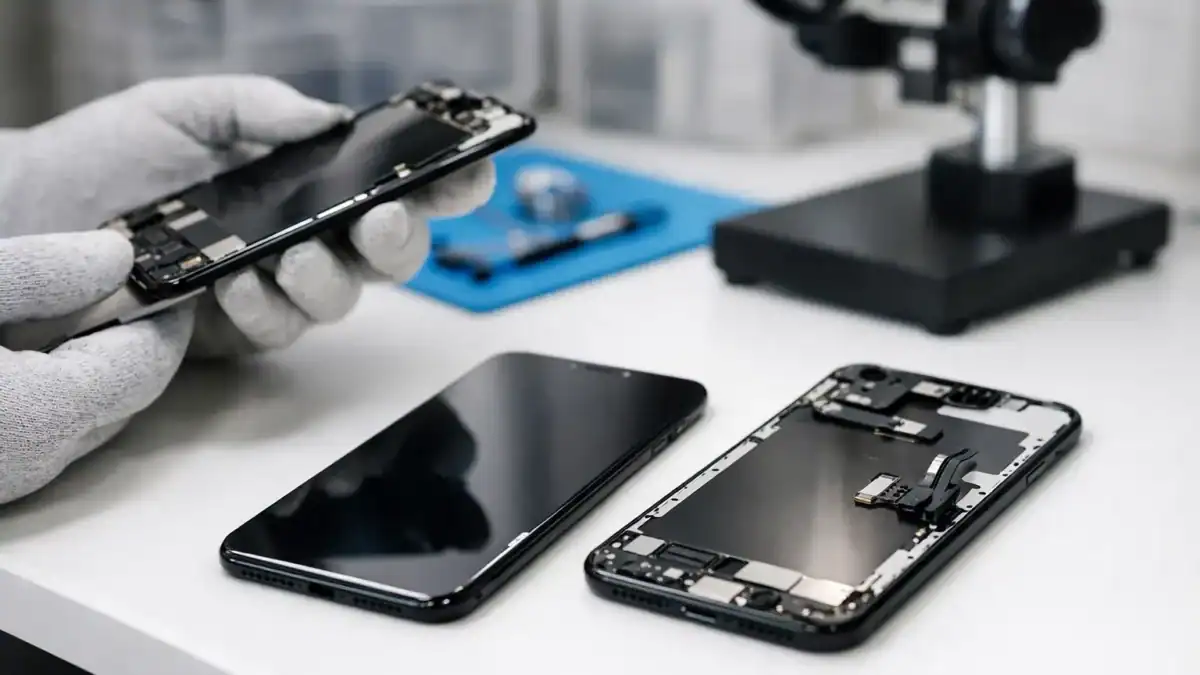
A refurbished screen can protect margin on a repair that would otherwise need a costly new service pack, but only when the part is correctly described and correctly matched. Knowing how to source refurbished iPhone screens means looking beyond the word “refurbished” and checking the model, display specification, condition standard and supplier process before the part reaches your bench.
For repair shops and refurbishers, a screen purchase is not simply a component cost. It affects turnaround time, repeat repairs, customer confidence and the amount of time a technician spends resolving avoidable fitting issues.
What a refurbished iPhone screen should mean
In the repair trade, a refurbished iPhone screen is normally an original Apple display assembly that has been repaired after damage. The OLED or LCD panel, touch layer and display electronics may remain original, while the outer glass has been replaced. This can offer a useful balance of original display performance and lower cost compared with a brand-new genuine assembly.
The description matters because suppliers may use terms differently. An aftermarket screen is a newly manufactured compatible part, not a refurbished original display. A pulled screen is removed from another handset and may retain its original glass, along with unknown wear or history. A refurbished screen should have undergone a defined restoration process, but the detail of that process and its quality can vary.
For an OLED iPhone, the distinction is especially relevant. Original OLED assemblies generally provide better colour handling, brightness behaviour, viewing angles and power performance than lower-grade compatible options. That does not make refurbished screens the right choice for every repair. A budget repair may suit an aftermarket option, while a higher-value device resale or premium customer repair may justify a refurbished original assembly.
How to source refurbished iPhone screens by exact model
Start with the device identity, not the customer’s description of the handset. “iPhone 12 screen” is not enough for purchasing. Confirm the precise model family and variant from the handset settings, model number or physical identifiers. Similar-looking models can use different screen sizes, connectors, panel technologies and frame arrangements.
Check whether you are buying a display-only unit, a screen assembly with frame, or a complete assembly with additional small parts fitted. The correct choice depends on the repair workflow. A screen with frame can reduce labour and help when the original housing is bent or damaged. A display-only assembly can be more economical when the frame is sound and the technician has the equipment to transfer components safely.
Pay particular attention to models where functional components must be transferred from the original display. Depending on the iPhone generation, this may include the front camera and sensor flex, earpiece speaker assembly, brackets, mesh and flood illuminator-related components. Damage during transfer can affect Face ID, proximity sensing, auto brightness or call audio.
When ordering, record the handset model against the job number and pick parts through a model-led catalogue structure. This reduces errors where a screen is selected by appearance rather than compatibility. A supplier such as iParts4U that organises stock by device family and component type makes this process quicker, particularly when handling several repairs at once.
Assess the grade before you assess the price
A low purchase price is only useful if the fitted screen performs consistently. Ask how the product is graded and what has been tested. The most useful product information covers the panel type, glass condition, touch performance, brightness, cosmetic grade and any supplied small parts.
For refurbished OLED assemblies, establish whether the panel has been checked for common faults such as burn-in, dead pixels, flickering, green or white lines, black crush, uneven brightness and touch dead zones. For LCD models, look for light bleed, uneven backlighting, dust under the glass and weak touch response at the edges.
A practical incoming inspection should cover at least four areas:
- Visual condition, including glass alignment, bezel fit, frame damage and debris beneath the display.
- Image quality, including brightness, colour uniformity, dark-screen performance and pixel defects.
- Touch operation across the full panel, particularly around the keyboard edges and top corners.
- Flex and connector condition, checking for creasing, torn pads, bent contacts or signs of prior poor-quality repair.
Do not assume that “original” automatically means fault-free. Original panels can still have wear, prior water exposure or damage introduced during refurbishment. Equally, a well-specified compatible screen may be a sensible option where price is the customer’s main concern. Source to the agreed repair grade, not to a label alone.
Check the refurbishment standard and supplier controls
The quality of glass refurbishment has a direct effect on fitting and long-term reliability. Poor bonding can lead to lifting edges, trapped dust, weak seals, inconsistent touch sensitivity or a display that separates later. Screen assemblies should be cleanly laminated, evenly finished and supplied with flexes that sit naturally without strain.
Before committing to a new line, buy a controlled quantity and fit-test it across typical jobs. Track any failures by model, batch and fault type. This is more useful than relying on a single successful installation, as display issues may only become visible after several days of use or across a particular production batch.
A dependable supplier should provide clear compatibility information, consistent stock descriptions and a workable process for faults. For trade buyers, speed matters, but so does the ability to identify what was supplied if a return is needed. Keep packaging, labels and order references with the job until the repair has passed final testing.
It also helps to separate stock by quality tier in your own system. For example, reserve refurbished original screens for premium repairs, resale devices and customers who prioritise display quality. Keep compatible OLED or LCD options available for price-sensitive repairs where the customer has agreed the specification in advance. Clear choice at the point of quotation prevents disputes later.
Account for iPhone display messages and paired parts
Many newer iPhone models use serialised components and may show an “Important Display Message” after a screen replacement, even where an original display has been refurbished. This is a device-level software and pairing consideration, not necessarily proof that the screen is defective.
Explain this before taking in the job. A customer who sees a message after collection may assume the repair has failed if they were not informed in advance. Your job sheet should state the screen type being fitted, whether the original component assemblies are being transferred and whether a display notification may appear.
Technicians should also follow appropriate procedures for preserving features where possible. Transfer original paired components carefully, use the correct tools and avoid damaging flex cables or the earpiece and sensor assembly. Do not promise that every original feature or system message can be preserved without first checking the exact model, installed part and repair method.
Build sourcing around your actual repair volume
The best buying strategy depends on what comes through the door. A shop handling regular iPhone 11, 12, 13 and 14 repairs may benefit from holding fast-moving refurbished OLED screens in local stock. For older, less frequent or high-cost Pro Max models, ordering against confirmed jobs may be safer for cash flow.
Review your sales data rather than stocking by assumption. Look at the models repaired most often, the screen grade customers choose and the failure rate by supplier. Keep enough buffer stock to prevent routine delays, but avoid tying up capital in ageing models with uncertain demand.
For each line you stock, set a minimum acceptable standard: no panel defects, full touch response, clean glass refurbishment, reliable flexes and a clear fault-return route. If a screen does not meet that standard, its apparent saving can disappear through extra labour, return postage and a dissatisfied customer.
The right refurbished iPhone screen is the one that matches the handset exactly, fits your promised repair grade and arrives from a supplier whose quality remains consistent over repeat orders. Build those checks into every purchase, and screen sourcing becomes a controlled part of the repair process rather than a gamble at the fitting bench.