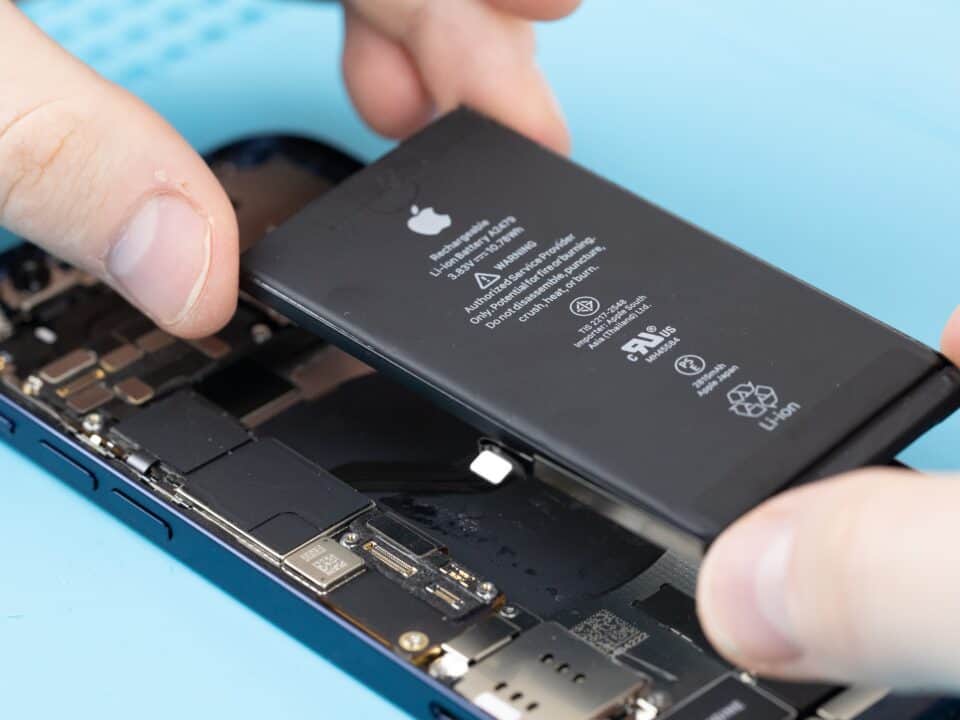
If you’re planning to buy a smartphone, one of the key things to consider is its battery life and the battery’s lifespan. Since phones are portable gadgets, the battery should hold power for a long time to allow you to enjoy its use for a long time on a single charge. Though all rechargeable batteries have a lifespan that affects their capacity and performance, manufacturers have developed innovations that enable the batteries to last longer. For example, modern iPhones come with lithium-ion batteries, which is currently the best battery technology. Unlike the older battery technology, lithium-ion batteries charge faster and last longer. They also have a higher power density for more battery life in lighter packages.
Additionally, all recent iPhone models (iPhone 6 and later) have the Apple performance management feature that prevents unexpected shutdowns. Here we talk about the battery type used in modern iPhones and the purpose of the performance management function in particular. Read on to learn more.
iPhone Battery Type and Advantages
All newer models come with a non-removable lithium-ion new iPhone battery, currently the best battery technology for portable devices. Thanks to their higher energy density, these batteries charge faster, have longer battery life, and have better charge retention. This battery uses lithium ions as the key component of its electrochemistry.
Why Lithium-ion?
Below are some of the reasons why Apple prefers Lithium-ion batteries over other battery technologies.
They Charge Fast for Convenience and Slow for Durability
Unlike older battery technologies, the Apple lithium-ion battery uses fast charging to reach 80% of its capacity within a short time and then shifts to slower trickle charging. According to Apple, the amount of time the battery takes to reach 80% may vary, depending on the device you are charging and the device’s settings.
The device’s software can also limit charging above 80% if the battery’s temperature exceeds the recommended range. This combination of fast and slow charging will let you charge your device and extend the battery’s lifespan.
It Simplifies Charging
If you experienced using the earlier phone models, you must have experienced the challenges of waiting for the battery to discharge 100% before recharging. Fortunately, lithium-ion batteries allow you to charge whenever you want without affecting the battery’s durability. In addition, though the Apple lithium-ion batteries work in charge cycles, you don’t have to use 100% of your battery’s capacity at once to complete one cycle.
For example, you can use 60% of your battery and recharge it to full capacity when you get home. If you use 40% the following day, you will have used a 100% of the battery’s capacity, completing a charge cycle in two days.
Any battery type’s capacity will decline after a certain number of recharges. For lithium-ion batteries, the charging capacity slightly drops with each charge cycle you complete. Fortunately, these batteries can hold at least 80% of their original capacity after numerous charge cycles. However, this may vary depending on the product.
It is Lightweight
Nowadays, nobody wants to carry around a heavy phone in their pocket or handbag. Moreover, since modern-day phones require a lot of energy to perform complex functions, there has been an increasing need for a battery that can provide more energy while remaining lightweight. Compared to other batteries, lithium-ion batteries provide similar or greater energy at less than half their size and weight. This means that you can enjoy a lighter Apple phone without compromising its ability to last long after every charge.
They are Non-Hazardous
Since batteries will not last forever, it is important to consider their impact on the environment when they get disposed of. Fortunately, Lithium-ion batteries are considered safe for landfills, as they are made of safe elements like iron, copper, nickel and cobalt.
iPhone Power Management Function
Since Apple values convenience, they added the power management function in most iPhone models to prevent unexpected shutdowns. These shutdowns are mainly caused by cold temperatures, a higher chemical age or a low charge. Apple introduced this feature in March 2018, meaning it is only available in iPhone 6 and later models.
what Is The iPhone Power Management Function?
The iPhone performance management function is a built-in iOS feature that manages performance peaks to prevent unexpected shutdowns when using an iPhone. The feature is only available on iPhone and does not apply to other Apple products.
How Does It Work
iPhone Power Management Function works by monitoring your device’s temperature, battery impedance and the battery’s state of charge. Your device’s operating system will manage the maximum performance of some system components, like GPU and CPU, only when the above variables require it.
This process will prevent sudden large and quick spikes of performance by promoting a smoother distribution of system tasks for balanced workloads. Fortunately, users may not notice any differences in the performance of newer iPhone models, thanks to the advanced design of their software and hardware. Some of the effects of performance management include:
- Longer app launch times
- Backlight dimming
- Some apps may experience gradual frame-rate reductions
- Disabled camera flash
- Lower speaker volumes
Key areas affected by the Apple Performance Management Function include:
- Quality of captured photos and videos
- Network throughput and call quality
- Apple pay
- GPS
- Sensors like
barometer, gyroscope and accelerometer
If your phone is in cold temperature or the battery is in a low state of charge, the changes caused by performance management are temporary. However, if the battery is chemically aged, the changes will be long lasting as it will be approaching the end of its lifespan. Therefore, if your iPhone’s performance is highly impacted by performance management and would like to improve its performance, the only option left is to replace the battery.
How Is It Used?
The main purpose of the iPhone Battery Power Management Function is to prevent unexpected shutdowns when your phone’s battery is of high battery age or when you are operating the phone in extremely cold temperatures. The feature will kick in after your phone experiences the first unexpected shutdown due to its battery’s reduced ability to deliver maximum instantaneous power.