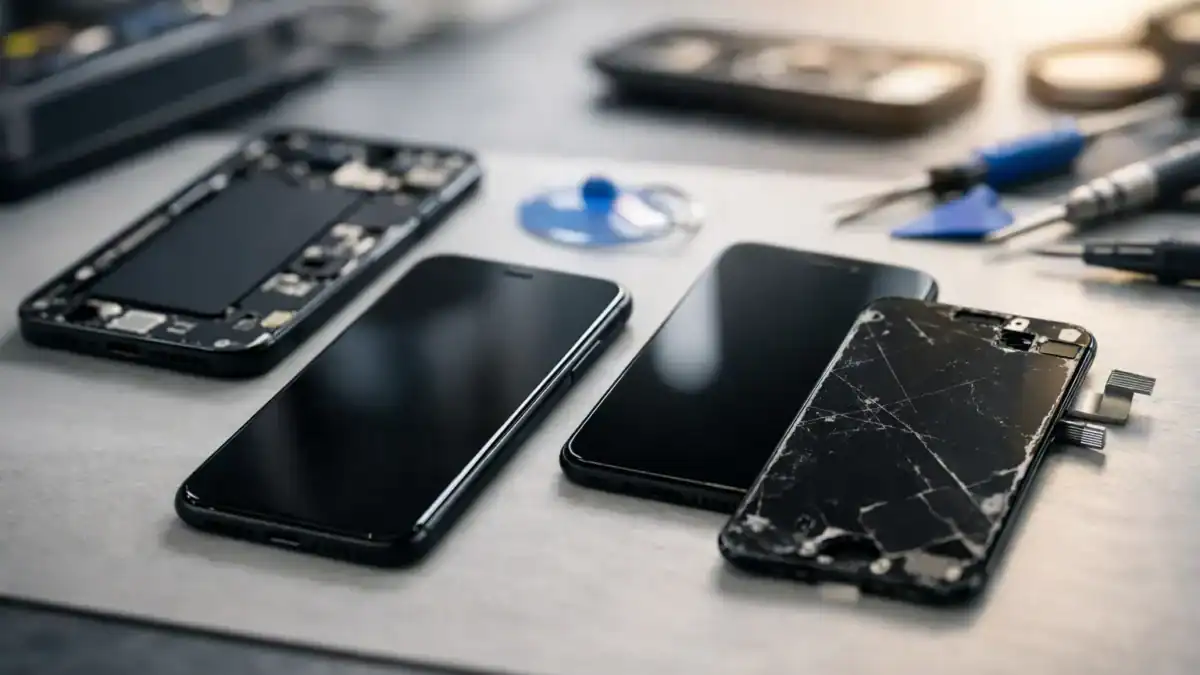
A cracked front glass is only one reason customers ask for iPhone screens. A handset may have no image but still vibrate, show lines after an impact, suffer touch failure, or display a black screen with a working backlight. For a repair business, the priority is not simply fitting a screen that powers on. It is sourcing the correct replacement for the exact model, at a grade and specification that suits the job.
That distinction affects repair time, margin, return rates and the customer’s experience once the device leaves the bench. iPhone display assemblies can look very similar across generations, but connector layouts, panel technologies, dimensions and transferred components vary. Identifying the handset correctly before ordering remains the quickest way to avoid an unnecessary delay.
Start With the Exact iPhone Model
Model identification should come before choosing a screen quality. Customers may describe their phone by screen size, colour or the year they bought it, but these details are not reliable enough for ordering parts. Several iPhone generations share a similar housing or display size while using different assemblies.
Check the model number in Settings where the device remains usable, or confirm it from the rear housing, SIM tray information or the handset’s original packaging where appropriate. For damaged devices, compare the physical layout carefully. The placement and size of the front sensor area, camera arrangement, frame shape and connector configuration can help distinguish close model families.
This matters particularly on later models. A replacement for an iPhone 12 is not interchangeable with an iPhone 12 Pro, despite their similar dimensions. The same principle applies throughout the range, including Plus, Pro, Pro Max, mini and SE variants. Ordering by a broad description such as “iPhone 13 screen” without confirming the suffix creates avoidable compatibility issues.
Choosing Between iPhone Screen Types
The right display type depends on the original specification, the repair budget and the expected use of the handset. Trade buyers may keep several options available for common models, allowing them to match the part to a standard repair, a refurbishment project or a customer request.
OLED and Soft OLED Displays
OLED panels are used on many modern iPhone models and deliver the deep blacks, contrast and response associated with the original display. Soft OLED options generally use a flexible panel construction closer to the original design. They can offer a premium result and are often the preferred route when image quality and touch response are central to the repair.
The trade-off is cost. On a lower-value or heavily worn handset, the customer may not want the additional expense of a premium panel. It is sensible to establish the required finish and budget before beginning the repair, especially when quoting for a device intended for resale.
Hard OLED Displays
Hard OLED screens provide an OLED option at a different price point. Their panel construction is more rigid than soft OLED, which can affect durability in a further impact. They may still be suitable for repairs where an OLED display is required but the economics do not support a higher-grade alternative.
Technicians should assess the condition of the frame before fitting any OLED panel. A bent or distorted housing can place pressure on the replacement screen and raise the risk of damage during installation or later use.
LCD and Incell Displays
LCD or incell replacements are commonly chosen for budget-conscious repairs on compatible iPhone models. They can provide a practical working display at a lower part cost, making them useful for older devices, secondary handsets and repairs where a customer has prioritised price.
They are not a like-for-like match for an original OLED display. Brightness, black levels, viewing angles, power consumption and perceived colour can differ. A clear explanation at quotation stage helps prevent disagreement after the repair. For refurbishment stock, consistency is also important: using the same grade across a batch makes assessment and resale easier.
Refurbished Original Screens
Refurbished original assemblies can be a strong option where preserving the original display quality is the objective. These parts generally retain an original panel with replacement glass or other refurbishment work completed. Their suitability depends on the specific grade, availability and the standard required for the device.
Inspect and test any display assembly before final sealing. A refurbished screen can be an excellent fit for a quality-led repair, but it should be treated with the same care as any other part: verify image quality, touch function and the condition of the flexes before installation.
What a Complete Screen Assembly Should Include
A replacement screen assembly usually includes the display panel, touch layer, front glass and the relevant flex cables. It does not always include components that must be transferred from the original device. This is where technicians need to read the product specification rather than assume every screen is ready to fit straight from the box.
Depending on the model, transferred parts may include the earpiece speaker assembly, front camera and sensor flex, brackets, mesh, adhesive or display shields. On models with Face ID, the original paired front sensor components require particular care. Damage during removal can affect functionality, and replacement parts alone may not restore every original feature without the appropriate programming or calibration process.
The same principle applies to display-related notifications on newer iPhones. Apple’s parts pairing and software messages can affect what the user sees in Settings after a screen replacement. A warning message does not necessarily mean the panel is defective, but it should be understood before the job is quoted. Where professional programming equipment and compatible procedures are available, technicians can plan this work as part of the repair rather than treating it as an afterthought.
Checks to Make Before You Close the Device
A screen that shows an image is not yet a completed repair. Before applying final adhesive and closing the handset, test the assembly while it is connected. Confirm touch response across the full panel, check for dead pixels, lines, flicker and uneven illumination, then test the front camera, earpiece, proximity sensor and ambient light functions where applicable.
It is also worth checking battery condition and frame alignment at the same time. A swollen battery can push against a replacement display, while broken frame clips or a warped housing can stop the screen sitting flush. Fitting a new panel without addressing these faults may lead to repeat work that is wrongly attributed to the screen.
For water-resistant models, use the appropriate replacement adhesive and make the customer aware that a repair cannot automatically guarantee the handset’s original factory water-resistance rating. This is a practical point, not a sales detail, and it helps set the right expectation.
Buying iPhone Screens for Repair Work
For repair shops and refurbishers, stock selection is a balance between model demand, part grade and cash flow. High-turnover assemblies for popular generations may justify holding more than one quality option. Less common or older models can often be sourced as needed, provided the exact model is confirmed before ordering.
Product descriptions should be checked for model compatibility, display technology, frame colour where relevant, grade and included components. Do not base a purchase solely on a product image. Images are useful for reference, but the stated model family and specification determine whether the part is suitable.
iParts4U organises replacement parts by device family and component category, helping trade and DIY buyers narrow down the correct screen before checkout. This is particularly useful when a workshop handles a mix of older iPhones, current models and devices brought in with incomplete customer information.
When a Screen Replacement Is Not the Whole Fix
Not every black display indicates a failed screen. Impact damage can also affect the display connector, logic board, battery connection or housing. If a known-good replacement screen does not produce an image, further diagnosis is needed before fitting additional parts.
Likewise, intermittent touch issues can be caused by contamination, prior repair damage, loose connectors or board-level faults. Inspect the connectors under magnification, check for torn pads and look for signs of liquid ingress or corrosion. Replacing parts by assumption can turn a profitable repair into a costly one.
A well-chosen screen starts with precise identification, but a dependable repair ends with testing, clear customer communication and an honest assessment of the device around it. That approach protects your time and gives the replacement part the best chance of performing as intended.