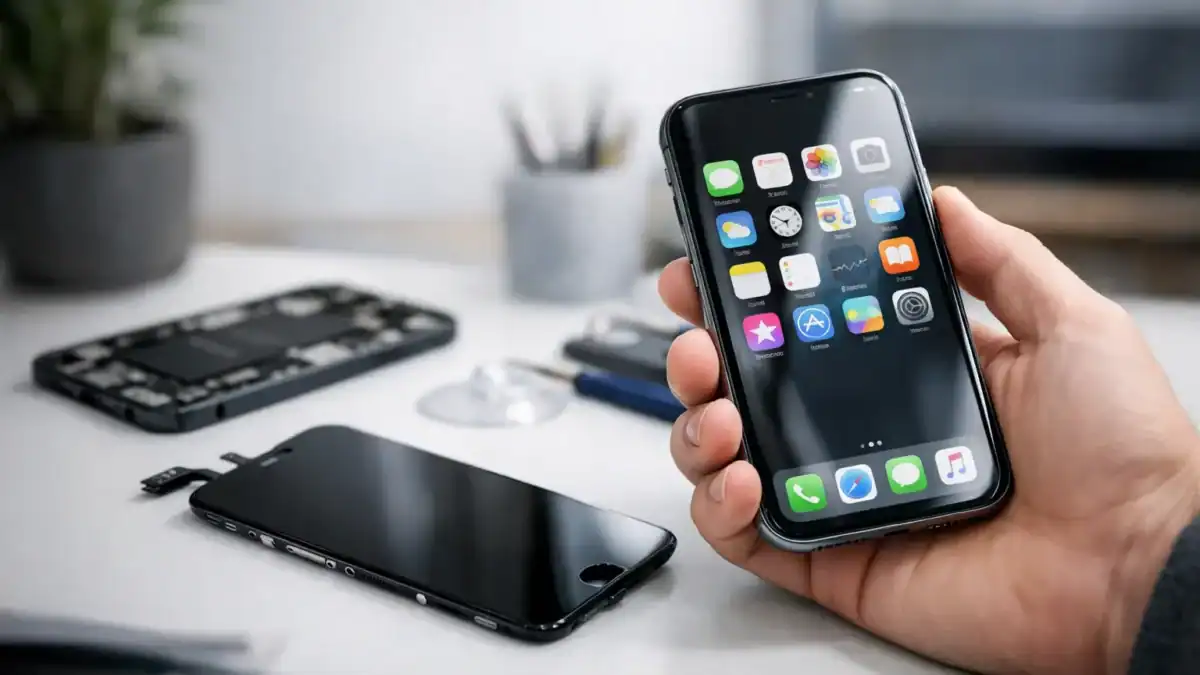
A cracked iPhone display can turn a straightforward repair into a costly decision. This refurbished iPhone screen review looks at where reclaimed original screens fit in a professional repair workflow, what can go wrong, and how to decide whether a refurbished assembly is the right part for the handset in front of you.
For repair shops, refurbishers and technically confident DIY buyers, the appeal is clear. A properly reconditioned original screen may retain the panel characteristics customers expect from Apple hardware, while costing less than a new service-pack display. That does not make every refurbished screen the automatic best option. Grade, model compatibility, panel condition and post-fit testing all matter.
What a refurbished iPhone screen usually means
In the repair trade, a refurbished iPhone screen normally refers to an original display assembly that has been recovered from another device and reconditioned. The exact process varies by supplier. On many OLED models, the damaged front glass may have been removed and replaced while the original OLED panel, touch layer and flex cables are retained. On other units, the assembly may be a tested pull with cosmetic refurbishment rather than a glass-only rebuild.
That distinction matters. An original OLED with professionally replaced glass is not the same product as an aftermarket soft OLED, hard OLED or LCD conversion. Each has a valid place in the market, but they differ in display quality, fitting characteristics and price.
A refurbished screen should be sold with a clear model designation and condition description. Do not assume that wording such as “original”, “refurbished” or “premium” means the same thing across all suppliers. Check whether the listing identifies the panel type, the condition of the frame and glass, and whether the screen is supplied with small parts or as a bare assembly.
Refurbished iPhone screen review: quality in real repairs
The strongest case for a refurbished display is usually panel quality. If the underlying panel is an original Apple OLED, black levels, viewing angles, brightness behaviour and touch response can be closer to the customer’s original experience than on many lower-cost alternatives. This is particularly relevant on iPhone X and later OLED models, where fitting an LCD conversion can noticeably change screen thickness, contrast and battery demand.
However, refurbished does not mean fault-free by default. OLED damage can be subtle. A panel may look acceptable on a bright white screen yet show tinting, low-brightness flicker, dead areas or uneven luminance when tested more thoroughly. Re-glassed displays can also vary in glass alignment, oleophobic coating feel and frame condition.
For a repair business, the practical question is not whether refurbished screens are universally better. It is whether the expected quality level matches the job, the quoted price and the warranty exposure. A good refurbished original screen can be an excellent middle-ground option for a customer who wants an OEM-type display without paying for a new service part. A budget repair on an older handset may instead justify a reliable aftermarket option.
The trade-offs to explain to customers
A refurbished screen can offer original panel technology and a more familiar user experience, but it may have minor signs of reconditioning that a brand-new display would not. The glass, frame and polariser work must be assessed carefully. On a device being prepared for resale, consistency across the batch can matter just as much as the quality of one individual screen.
Aftermarket screens may be more predictable in supply and can be a sensible option where cost is the main priority. The compromise may be reduced brightness, different colour rendering, a thicker assembly or lower durability, depending on the panel type. The right choice depends on the iPhone model and the customer’s expectations, not a single label on the product.
Checks to complete before final sealing
Screen testing should happen before adhesive is applied, screws are fully tightened or the device is closed. This limits repeat labour if a defect is discovered. A short visual inspection is useful, but it is not enough for refurbished OLED assemblies.
Test the display at low, medium and maximum brightness. Use white, black, red, green and blue backgrounds to identify dead pixels, marks, colour shift and uneven areas. Check the touch response across the complete panel, including the edges, keyboard areas and swipe zones. On models with Face ID, test the relevant functions after the original sensor assembly has been transferred correctly.
A practical pre-seal check should cover the following:
- Display brightness, colour uniformity and black-screen performance
- Touch response across the full digitiser, including multi-touch
- Proximity sensor, earpiece speaker and front camera operation
- Face ID functionality where applicable
- Frame fit, bezel alignment and the condition of flex cables
Also inspect the handset before attributing a fault to the replacement screen. Liquid damage, a bent housing, damaged board connectors and a failed ambient light sensor can all create symptoms that appear to be screen-related. A distorted chassis can place pressure on a new display and lead to premature failure.
Compatibility is more than matching the iPhone name
Ordering a screen for “iPhone 11” or “iPhone 12” is only the first step. Confirm the exact device model, screen technology and part configuration before placing an order. Similar generations can use different assemblies, and small differences in connector layout, frame design or sensor placement can stop a screen from fitting correctly.
Technicians should also account for Apple’s parts pairing and display notifications on certain newer iPhone models. Depending on the model, software version and repair procedure, the handset may show a message about an unrecognised display or may not retain every original feature without the appropriate configuration process. This is separate from the physical quality of the screen itself.
True Tone is another common point of discussion. Where supported, retaining or restoring it may require transferring display data with compatible programming equipment before fitting. Do not promise feature retention unless your workshop has confirmed the process for that specific model and screen type.
For DIY buyers, this is where a repair can become less straightforward. The physical swap may be manageable, but the original earpiece, sensor assembly and display data can be critical. If Face ID is damaged during the transfer, it is not a simple replacement-part repair.
When refurbished is the right buying decision
Refurbished iPhone screens are particularly useful for higher-value handsets where original OLED quality is a priority and the customer understands that the part is reclaimed and reconditioned. They can also work well in refurbishment programmes, provided every screen is tested to the same standard and the device housing is checked before installation.
They are less suitable where a repair requires guaranteed factory-new cosmetics, where a device has a severely bent frame, or where the customer expects every Apple software feature to behave exactly as it did before damage. In those cases, the conversation should happen before the repair is authorised, not at collection.
For trade buyers, stock selection should reflect the jobs that come through the door. Keep clear separation between refurbished original, soft OLED, hard OLED, incell and LCD options. This prevents counter staff and technicians from fitting the wrong quality tier under time pressure. Suppliers such as iParts4U organise replacement parts by exact model family, which helps reduce errors when sourcing across older and newer iPhone generations.
A better way to quote the repair
The most effective quote gives the customer a choice rather than presenting one screen as universally superior. State whether the proposed part is refurbished original or aftermarket, explain the expected quality level in plain language and note any model-specific feature limitations before work begins.
That approach protects margin as well as customer trust. A well-tested refurbished screen can deliver a very strong result, but only when it is the correct assembly for the device, fitted to a sound housing and sold with realistic expectations. Treat the screen as a repair component rather than a commodity, and the right option becomes much easier to identify.