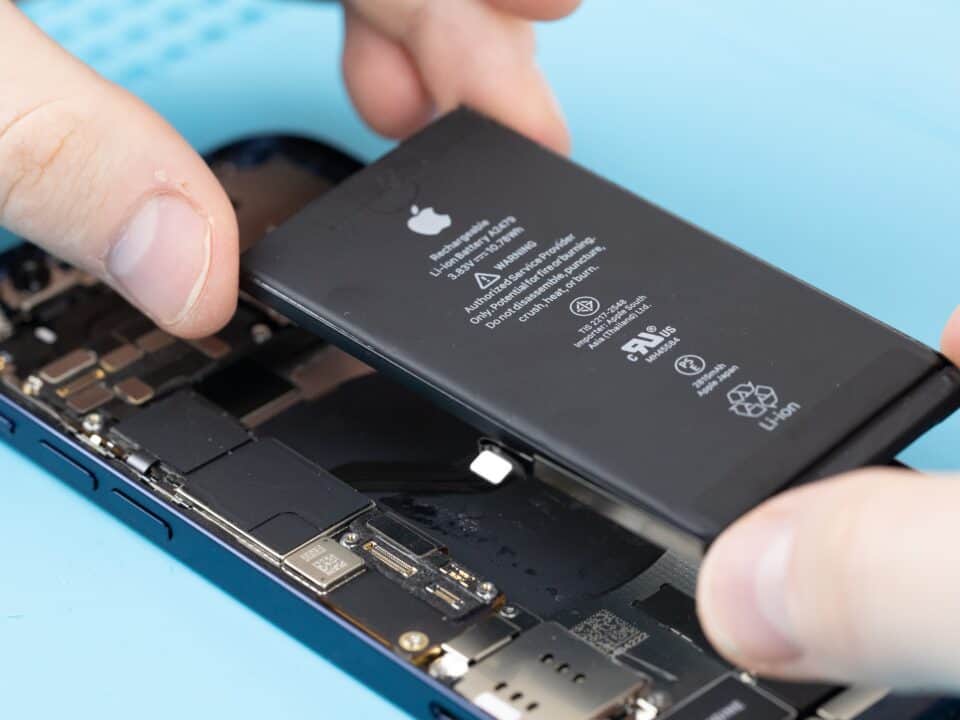
Do you consider the phone battery before you buy your next mobile? Well, most people only think of the obvious marketing features like the camera quality, memory and processing speed whilst forgetting about crucial features like the battery. Smartphones are portable devices, meaning you should be able to use it outside your house or office for a reasonable time without the need to recharge. To understand the importance of a battery in a smartphone, think of having a phone with all the best features in the market, but then it keeps nagging you about low battery only a few hours after use. Such an issue can really limit you from some of the best benefits of having a high-end mobile phone. This article aims to help you when it comes to choosing the best new iPhone battery for your cell phone.
What Types of Batteries are in Mobile Phones?
Nowadays, smartphones come with different battery types to meet varying customer needs. The quality and design of the battery determine the energy they can store and hence the time you can use the device with a single charge. Phone manufacturers have to produce a powerful battery, but often face limitations in size and weight. The types of batteries commonly used in cell phones are Nickel-cadmium (NiCd), Nickel Metal Hydride (NiMH), Lithium-ion (Li-ion) and Lithium Polymer (Li-pol). Whilst all of these can be found in a mobile device, Lithium-ion and Lithium Polymer are the most commonly used in our phones.
Lithium Polymer (Li-Poly) Batteries
Lithium polymer batteries are currently the most advanced batteries on the market. They are now the most preferred type by most smartphone manufacturers. These batteries come with the advantage of being lightweight as they are mostly made of plastic, as opposed to metal. Another benefit of these batteries is that they don’t suffer from “memory effect“. They can also potentially offer 40% more power than most smartphone batteries of the same size.
Lithium-Ion (Li-Ion) Batteries
Lithium-Ion (Li-Ion) batteries are an older cell phone battery technology but are currently the most popular. These batteries have a higher energy density depending on their weight and size. They can also retain their battery capacity as they do not remember the charge cycle. The major drawbacks of Li-Ion batteries are that they are slightly more expensive. They are often not compatible with newer smartphones models.
Nickel Cadmium (NiCd) Batteries
This battery type is the most prone to memory effect. This can result in reduced battery capacity and lifespan.
NiCd battery users must fully discharge the battery and fully recharge it to avoid this issue of capacity. This is limiting for most individuals, as most people aren’t willing to wait for a device to fully discharge before recharging it. Nickel Cadmium batteries also contain toxic chemicals that can be harmful to your health as well as the environment.
Nickel Metal Hydride (NiMH) batteries
NiMH batteries are an upgraded version of Nickel-Cadmium batteries. The main difference between the two is that they do not contain cadmium.
These batteries can offer 30-40% higher capacity than NiCd batteries. They are also more environmentally friendly due to the elimination of the toxins found in cadmium. Nickel Metal Hydride batteries are still affected by memory, therefore still making them prone to memory effect. They are also at higher risk of explosion due to voltage drop after several charges. Reasons like this could be why cell phone manufacturers no longer use them.
So which is the best battery type?
Mobile phone manufacturers decide on the type of battery to use depending on the features of the specific phone model. The only battery types currently in widespread use are lithium polymer batteries and lithium-ion batteries. This is due to their superior quality compared to the older Nickel Cadmium and Nickel Metal Hydride batteries.
Lithium-ion batteries have a higher energy capacity compared to lithium polymer batteries. They can be a good choice if the phone has high electrical current requirements. Lithium polymer batteries, on the other hand, are the right choice if the size of the phone is paramount. You can also consider lithium batteries if the cost is a factor. They are usually less expensive than their lithium polymer counterparts.
How Long Should A Mobile Phone Battery Charge Last?
As like many of you, I have owned several mobile phones since their introduction into the market. Every phone has had a different charge holding capacity. The same would also apply even for another phone model because there are a lot of factors that impact how long a battery charge will last. Some of these factors are listed below;
Phone Usage
The way you use the phone depends on how long the battery will last. For example, a phone that is on standby mode can last longer than a phone that is regularly in use. A phone in standby mode can last up to three days depending on its type and the number of applications (apps) it holds. Top phone brands like Apple helpfully give their consumers an estimate of the number of full charging cycles the batteries should last. Phones also have an official talk time, which is mostly between five and seven hours on a single battery charge. Talk time is the number of hours you can use the phone for talking before the battery dies.
Applications
Applications are also a significant factor when it comes to determining how fast your phone battery drains. Applications that are used for playing games, videos and music are particularly demanding of a phone’s battery life and charge. Other uses that can drain your phone battery quickly include browsing the internet as well as prolonged use of the camera.
Battery Age
The battery will most likely die faster as your phone gets older. Batteries are not meant to live forever. This means they will start holding power for fewer hours as you approach the final stages of their lifecycle and they begin to naturally degrade. Most batteries will start draining faster than usual after an average of 18 months of regular use, however, this can be earlier or later depending on the frequency and nature of said use. It can also in some cases depend on whether the battery is kept continually recharging when not in use.
How to tell if a cellphone battery is bad
The best way to identify if a phone battery has a fault is by looking for the usual telltale signs that indicate the same. Some of the signs include;
Fast Charge Drains
A bad battery does not power up your phone for long, even when it is in idle mode. Most batteries will serve you for an average of two years or so. It is after this that you will start seeing these signs. The best thing to do is to replace such a battery (which you can get from us!), and your phone will be as good as new.
Failure to charge even after plugging in
Another common sign of a bad battery is that it just doesn’t charge. Some batteries may start charging after some time, but dead batteries stay dead even after several charging attempts.
Phone restarting on its own or powering off randomly
This is a prevalent complaint among smartphone users. You can be using your phone at the right charge level, and it suddenly restarts or powers off. The phone may require you to insert a charger to power on again.
A bulging or swollen battery
Some batteries can bulge when they go bad, especially as a result of overcharging. Overcharging causes the battery to overheat, thus leading to undesired chemical reactions that cause the swelling. You should replace such a battery immediately to avoid any potential damages to your phone’s back cover or screen.
Overheating
According to AVG, the average phone temperature should be between 37ºC and 43ºC. Anything above that should be a red flag. Overheating is a sign that your battery is not in good condition and needs replacing. Overheating can affect the overall performance of your phone, plus it also poses an immediate hazard.
Phone Battery Overheating Problems
Smartphones tend to get warm whilst they’re being used, but that does not include your phone getting “hot” from time to time. One major cause of overheating in phones is usually an overheating battery. Your phone battery can overheat as a result of both internal and external factors. Some of the reasons why your phone battery may be overheating include:
Prolonged Gaming
The battery will most likely overheat due to overuse. Some applications on the phone tend to consume more power than others, the main culprit of which are gaming applications. Heating gets worse if you use these applications simultaneously. Graphic intensive games naturally eat up the phone’s CPU, GPU and RAM, hence causing the battery to work harder than it should.
Environmental Factors
Another reason why your battery could be heating up is due to direct exposure to sunlight or another heat source. Phone batteries may encounter problems if the temperature is above 43ºC. The battery is also one of the biggest components in a phone, meaning it will absorb most of the heat.
What do I do if my Phone Battery Overheats?
An overheating battery is a hazard to itself as well as other components of the phone. It is also challenging to use an overheating phone as you cannot comfortably hold it with your bare hands. Below are some of the ways you can cool down your overheating battery.
Turn the Phone Off
Shutting the phone off will force close all the applications running in the background. Closing these should return the battery’s temperature to normal.
Give the Phone a Break
Using your phone continuously for a long time causes the battery to continue working, therefore may result in it overheating. Especially true if you are running high-graphic applications such as games. If you are using your phone while charging, stop one of the activities you’re doing if overheating occurs. It could be the reason why your battery is overheating.
Use the Right Charger
Another reason why your phone could be overheating is down to using a wrong charger. You should use official chargers that are specifically built for your phone type. This is because some chargers are for more demanding, energy-hungry batteries. This can lead to battery overheating and potential damage.
Summary
Everyone today owns a smartphone, and we use these devices for almost every aspect of our digital life. The phone battery is, therefore, an essential feature of a cell phone. It enables the use of the phone even in the absence of power sources. For example, when you are outdoors or on the move.
When buying a new smartphone it pays to research the battery a little bit. You can now see how important the battery is. When, rather than if you encounter a battery charge issue, you can buy good quality replacements such as ones available from iParts4U. There are available battery replacements for iPhones, Huawei, Samsung, Sony and other popular smartphone brands. However, do be aware that while some batteries can be easily replaced there are others that require a professional changeover. We can help in both cases, but the golden rule is that you’re uncertain, our friendly technical support team are here to help with some professional advice.