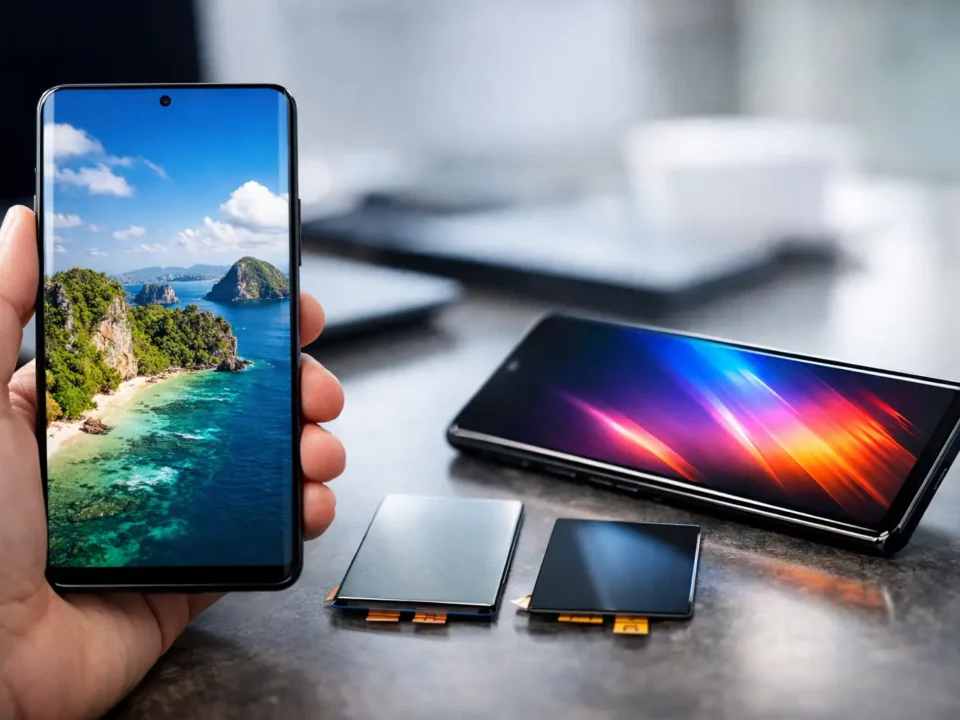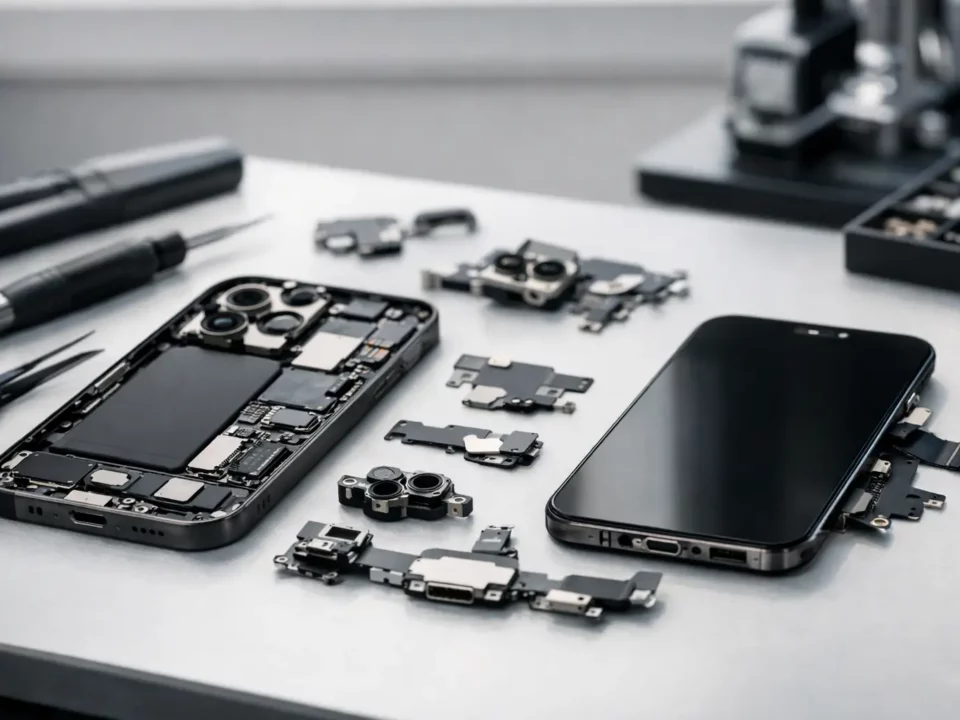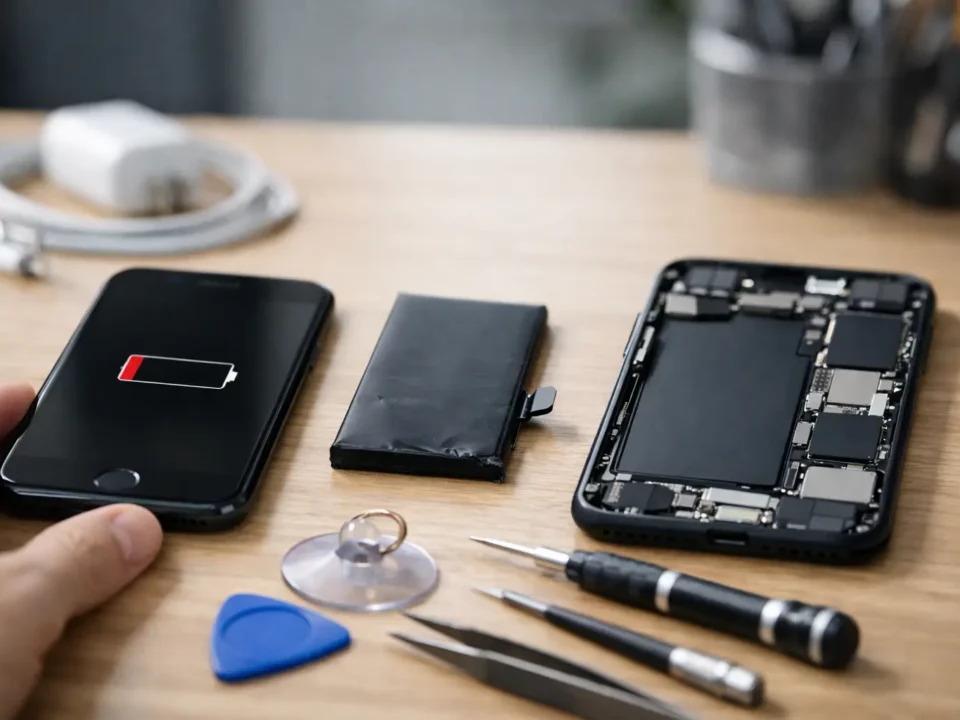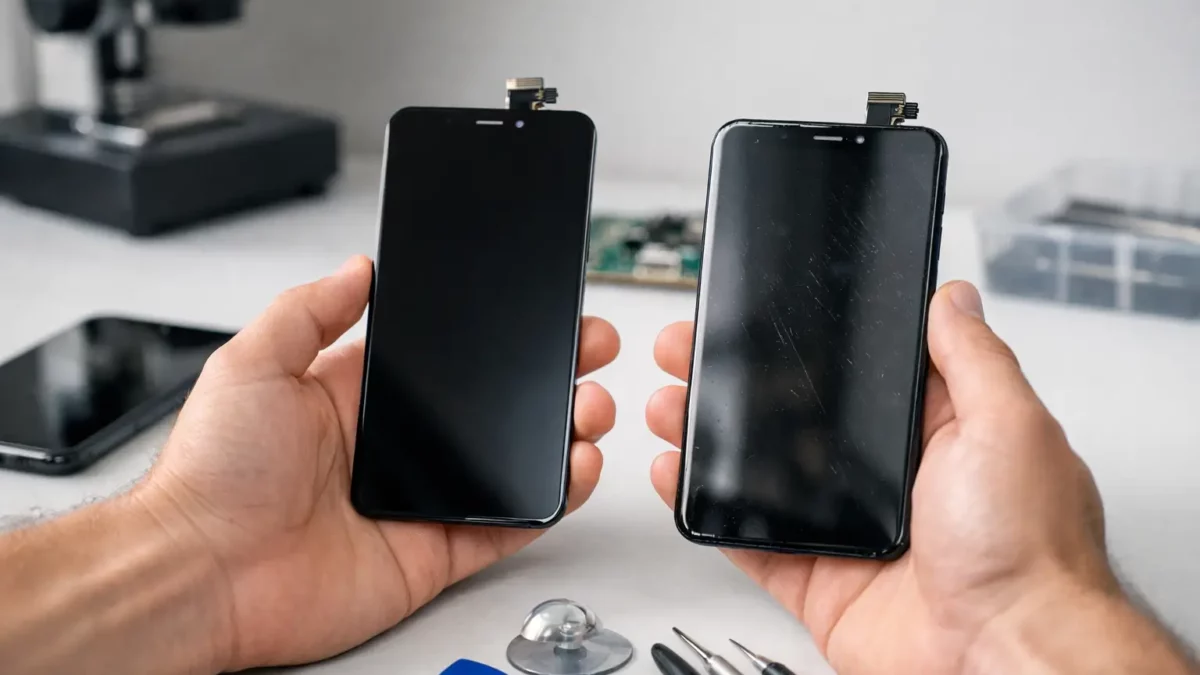
A screen can power on, show an image and still be the wrong choice for the repair. That is why are replacement screens different quality is a common question from repair shops and experienced DIY buyers. Two displays listed for the same handset may look similar in product photos, yet differ sharply in brightness, touch response, frame fit, battery draw and long-term reliability.
For trade repairs, the difference affects more than the finished result. A lower-cost screen may suit a budget-led repair, but a poor fit or a high return rate can remove any saving. The right choice depends on the device, the customer expectation, the condition of the original screen and whether features such as fingerprint recognition need to be retained.
Why replacement screens are different quality
Replacement displays are not all made from the same materials, processes or donor components. Product names such as OEM, original, refurbished, OLED, LCD, incell and soft OLED describe different things. Some refer to the panel technology, some to the source of the part, and some to its construction. They should not be treated as interchangeable quality grades.
An original service pack screen is supplied through the manufacturer’s parts channel for a particular model. A refurbished original screen usually began life as a genuine assembly with a damaged front glass. The broken glass is removed and replaced while the original display panel and, where applicable, original touch layer are retained. Its final quality relies heavily on the refurbishment process and the condition of the donor panel.
Compatible or aftermarket screens are newly manufactured alternatives. They can offer good value and are often the practical option for older models or lower-value devices. However, different factories can use different panel types, flex cables, touch controllers, frames and glass. Two compatible screens for the same model may therefore perform differently even if both are described as premium.
The key point is that quality labels are not standardised across the repair market. Check the specification, part type and exact model compatibility rather than relying on one word in a listing.
Panel technology changes the result
The panel is the biggest reason one replacement display looks and feels different from another.
OLED, soft OLED and hard OLED
Many modern Apple and Samsung handsets use OLED displays. Each pixel produces its own light, allowing deep blacks, strong contrast and thin panel construction. A good OLED replacement can give a close visual result, but OLED quality varies in colour calibration, peak brightness, viewing angle and power consumption.
Soft OLED uses a flexible substrate. It is closer in construction to the flexible OLED panels used in many flagship phones, which can improve frame fit and resistance to pressure during installation. It is generally the preferred compatible option where display quality and fit are priorities.
Hard OLED uses a rigid glass substrate. It can be more affordable, but is less forgiving if the handset frame is slightly bent or if pressure is applied around the edges. It may also have a thicker profile or a more noticeable bezel. For a budget repair it can be suitable, provided the customer understands the trade-off.
LCD and incell alternatives
LCD displays need a separate backlight. They cannot reproduce the true black levels of OLED, and are commonly thicker. On models originally fitted with OLED, an LCD conversion can show lower contrast, reduced viewing angles and different brightness behaviour. It may also use more power in certain conditions.
Incell describes a display design where the touch layer is integrated into the panel. It can reduce thickness compared with older LCD designs, but it does not automatically mean the screen matches the original OLED specification. It is a construction term, not a guarantee of panel quality.
For a customer whose priority is a low-cost, working device, an LCD alternative may be appropriate. For a premium handset being resold, refurbished or repaired for a customer expecting the original display experience, a refurbished original or higher-grade OLED option is usually the safer route.
The parts around the panel matter too
A replacement screen is an assembly, not simply a visible panel. Small differences in the surrounding components can create faults that appear only after fitting.
The touch digitiser controls swipe accuracy, edge response and multi-touch performance. A weaker digitiser may register touches inconsistently, especially near the keyboard edges or during gaming. The flex cable and connector quality also matter. Poorly made flexes can be vulnerable to repeated movement during fitting or develop intermittent display and touch faults.
Front glass varies in thickness, coating and edge finishing. Lower-grade glass can scratch more easily, reflect more light or feel less smooth under the finger. The oleophobic coating, which helps resist fingerprints, may wear sooner on some compatible parts.
Pre-fitted frames can save workshop time, particularly when the original housing is damaged. But frame alignment, button bracket positions, mesh, adhesive channels and screw-hole tolerances all affect the installation. A display that is technically compatible may still need adjustment if the frame is not produced to a close tolerance.
Brightness, colour and battery performance are linked
Customers tend to judge a screen first by brightness and colour. These differences are real, but they are not always visible under workshop lighting. Test under normal indoor light and bright light before returning the device.
A lower-grade panel may appear dimmer outdoors or have a cooler, warmer or more saturated colour balance than the original. Uniformity can also vary, causing darker edges, patches or uneven colour at low brightness. OLED replacements should be checked on white, grey and black backgrounds because defects can show differently at different brightness levels.
Power efficiency is another consideration. A panel with different electrical characteristics can affect battery life or generate more heat during extended use. This does not mean every compatible screen causes battery issues, but it is one reason why the cheapest option is not always the lowest-cost repair over time.
Features that may need transfer or calibration
Some screen-related functions depend on original components, software pairing or correct calibration. Fitting the display is only one part of the job.
On many iPhone repairs, the original earpiece speaker and front sensor flex must be transferred carefully to retain Face ID functionality. Damage to that assembly can prevent Face ID from working. Certain iPhone models may also show a parts or display message after replacement, depending on the model, component source and repair process. True Tone availability can depend on retaining or transferring display data using suitable equipment and procedures.
Samsung devices may require particular care around the fingerprint sensor. Where the sensor sits beneath the display, screen thickness, adhesive placement and panel construction can affect recognition. Re-registering fingerprints after the repair is good practice, but it cannot correct an unsuitable panel or a damaged sensor.
Always test the proximity sensor, ambient light sensor, front camera, earpiece, touch response, brightness control and biometric functions before sealing the device. If the repair uses a screen without a frame, test it before applying final adhesive. This avoids reopening a fully bonded handset to diagnose a part or transfer issue.
How to choose the right replacement screen
Start with the exact device identifier, not just the series name. Storage size is rarely relevant to screen fitment, but model generation, region and network variant can be. A screen for one iPhone generation or Galaxy variant may look almost identical to another while having a different connector, frame profile or sensor arrangement.
Then match the part grade to the repair objective. A trade customer handling a quick, price-sensitive repair may choose a tested compatible option. A refurbisher preparing a handset for resale will often place more value on display appearance, touch feel and lower return risk. For devices with an intact but cracked original OLED panel, refurbished original assemblies can be particularly useful because they retain the original panel characteristics while replacing the damaged glass.
Before fitting, inspect the part under good light. Check the connector pins, flex cable, bezel, frame tabs and any pre-installed mesh or brackets. Connect and test the display before removing protective films or applying adhesive. Use the original screws in their correct positions, as incorrect screw length can damage the display or board.
Price is a signal, not the whole specification
The lowest-priced screen may be the right product for some repairs, especially where the handset has limited residual value. But price alone does not show panel type, factory consistency, touch performance or how well the screen will sit in a previously repaired frame.
Likewise, a higher-priced screen is not automatically the best choice if it does not match the required repair outcome. The practical decision is to select a clearly described part from a supplier that organises screens by exact device model and grade, then test it properly before final assembly.
A good screen repair is not defined only by whether the display turns on. It is the one that fits the correct model, performs as expected for the chosen grade and gives the customer a result that matches the price of the repair.